
Summer baseball and softball are not just technical or tactical challenges. They are energy management challenges. Hydration, nutrition, recovery, cooling strategies, and nervous system management directly influence:
- bat speed,
- throwing velocity,
- reaction time,
- coordination,
- focus,
- recovery,
- and injury risk.
An athlete without energy cannot express high-level movement efficiently. The body always prioritizes survival before performance. As heat, dehydration, and fatigue accumulate:
- movement quality declines,
- coordination becomes less efficient,
- decision-making slows down,
- timing deteriorates,
- and injury risk increases.
This is especially true during:
- tournament weekends,
- doubleheaders,
- long summer practices,
- rain delays,
- and multi-game NCAA or travel ball events.
In many summer tournaments, the team that manages hydration, recovery, and energy best is often the team still performing late on Sunday.
The Reality Coaches Must Understand
Dehydration is not just “feeling thirsty.” It directly impacts:
- the nervous system,
- muscle contraction efficiency,
- thermoregulation,
- cognitive performance,
- coordination,
- and recovery capacity.
And the dangerous part is this:
Most athletes begin losing performance before they realize they are dehydrated.
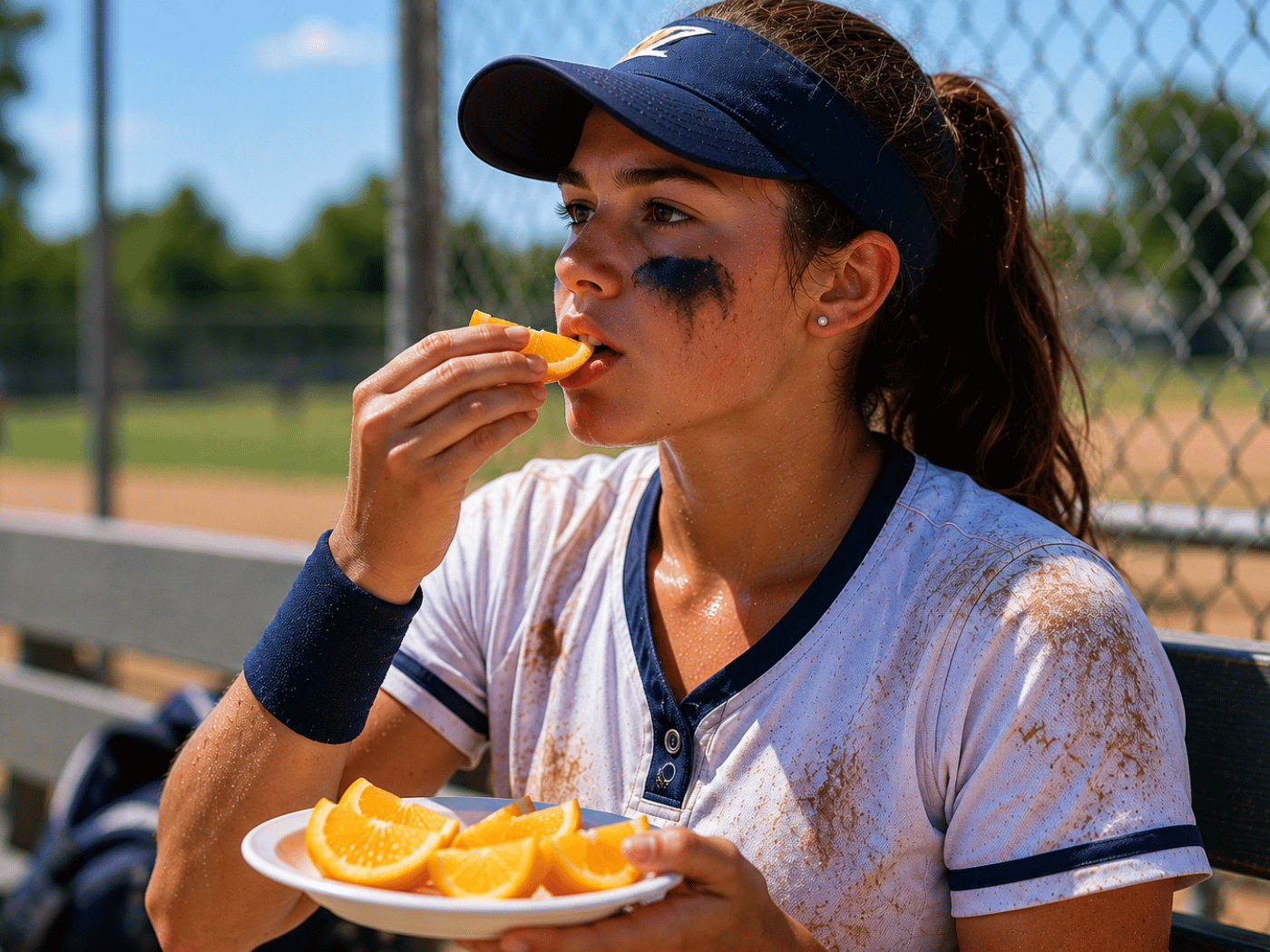
Dehydration and Performance Loss
Estimated Performance Impact by Dehydration Level
| Dehydration Level | What It Means | Estimated Performance Impact |
|---|---|---|
| 1% body weight loss | Mild dehydration | Increased fatigue, reduced concentration |
| 2% body weight loss | Significant dehydration | 8–20% performance decline in power, speed, reaction time and coordination |
| 3% body weight loss | Severe dehydration | Major fatigue, loss of precision, cramping risk, dangerous heat stress |
| 4%+ body weight loss | Critical dehydration | High risk of heat exhaustion or heat stroke |
What 2% Dehydration Actually Looks Like
| Athlete Weight | Fluid Loss Equivalent |
|---|---|
| 140 lbs athlete | ~2.8 lbs lost |
| 160 lbs athlete | ~3.2 lbs lost |
| 180 lbs athlete | ~3.6 lbs lost |
| 200 lbs athlete | ~4 lbs lost |
Many athletes can lose this amount during a single summer game or practice in high heat and humidity. Tournament weekends make the problem cumulative.
What Coaches Often See on the Field
Early Signs of Dehydration and Heat Fatigue
| Symptom | Potential Impact on Performance |
|---|---|
| Heavy legs | Slower acceleration and reduced explosiveness |
| Poor swing timing | Nervous system fatigue |
| Reduced throwing accuracy | Coordination decline |
| Headaches | Heat stress |
| Irritability | Cognitive overload |
| Slower reactions | Delayed pitch recognition and defensive reads |
| Cramping | Electrolyte imbalance |
| Athlete unusually quiet | Neurological fatigue |
| Dizziness | Dangerous dehydration level |
Baseball and Softball Are High Neurological Demand Sports
These sports require:
- explosive power,
- rapid perception,
- precision timing,
- fast decision-making,
- repeated accelerations,
- and constant nervous system activation.
Heat and dehydration affect all of these systems. Even small declines in:
- reaction time,
- coordination,
- visual processing,
- or movement efficiency
can completely change an at-bat, defensive play, or pitching sequence. Late innings are often decided by the team whose nervous system is still functioning efficiently.
The Three Most Common Summer Competition Scenarios
1) Single Weekly Game
Main Risks
- Starting already dehydrated
- Poor daily hydration habits
- Energy drinks replacing proper hydration
- Poor pre-game nutrition
Coach Priorities
- Hydrate throughout the day
- Avoid excessive caffeine
- Encourage proper meals before competition
- Monitor pitchers and catchers
2) Doubleheader or Two Games in One Day
Main Risks
- Progressive dehydration
- Nervous system fatigue
- Glycogen depletion
- Reduced coordination late in Game 2
What Coaches Typically See
- Slower reactions
- More mental mistakes
- Reduced explosiveness
- Emotional frustration
- Cramping late in games
Between-Games Priorities
| Priority | Goal |
|---|---|
| Cooling | Lower body temperature |
| Electrolytes | Replace sodium losses |
| Easy digestion | Maintain energy without GI stress |
| Nervous system recovery | Reduce overstimulation |
| Shade and rest | Reduce cumulative fatigue |
3) Three-Game Tournament Weekend (This is where many athletes begin surviving instead of performing.)
By Day 2 or Day 3:
- hydration deficits accumulate,
- sleep quality drops,
- nervous system fatigue increases,
- and body temperature regulation becomes harder.
This is often when:
- mechanics deteriorate,
- command decreases,
- swing timing disappears,
- and injury risk rises sharply.
The Hidden Problem: Nervous System Fatigue
Heat does not only fatigue muscles. It fatigues the brain and nervous system. Clinically, coaches frequently observe that some athletes:
- mentally “shut down” faster,
- lose movement precision,
- tolerate long delays poorly,
- or require more frequent reactivation.
Others may tolerate heat exposure longer but progressively accumulate muscular fatigue and stiffness. This reinforces the importance of individualized athlete management during summer competition.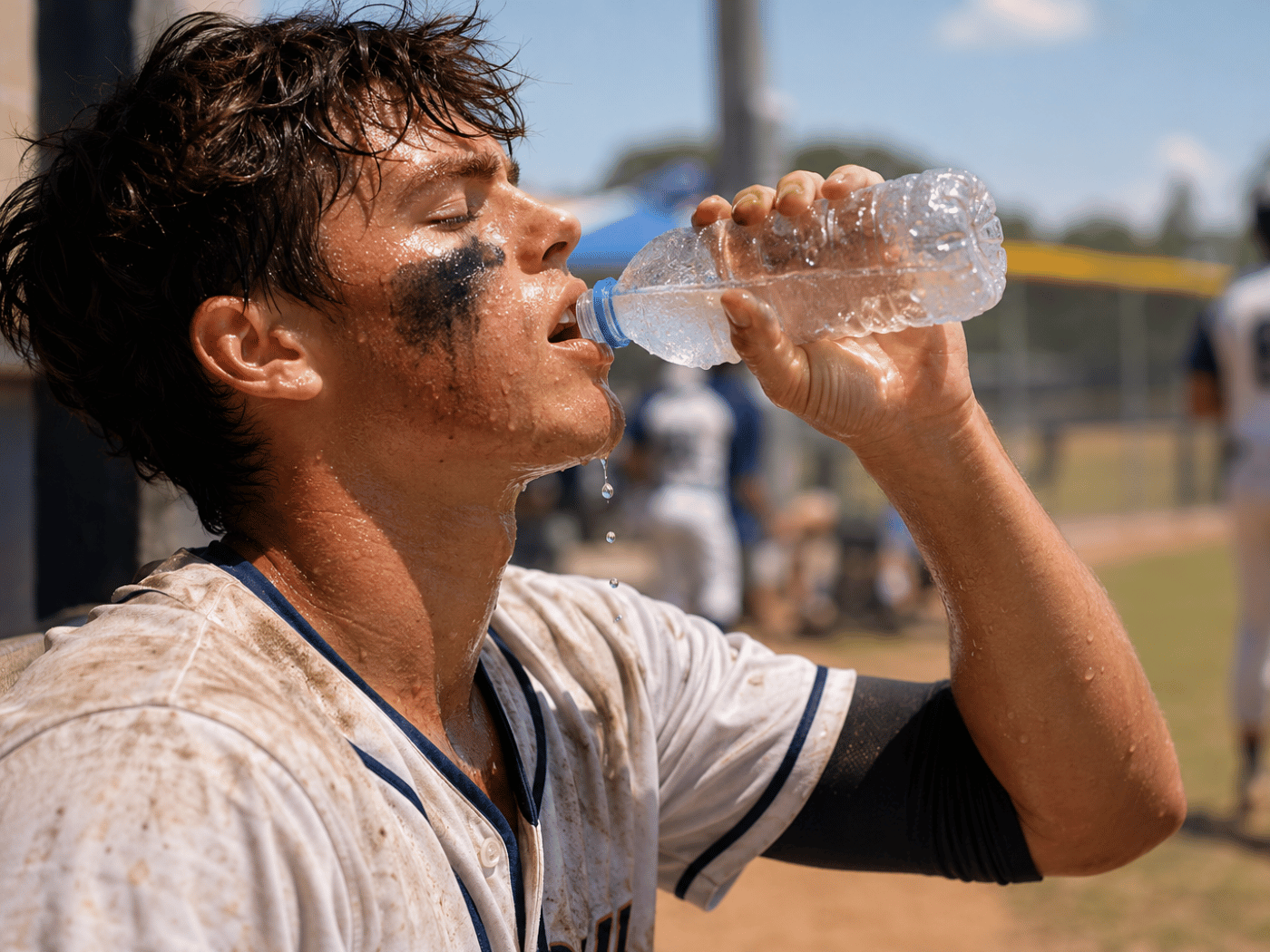
Coach Heat Management Checklist
Before Competition
| Strategy | Why It Matters |
|---|---|
| Hydrate the day before | Prevent starting dehydrated |
| Sleep properly | Nervous system recovery |
| Moderate sodium intake | Improve fluid retention |
| Avoid heavy junk food | Reduce digestive stress |
| Acclimatize gradually | Improve heat tolerance |
During Competition
Hydration Targets
| Timing | Recommendation |
|---|---|
| 2–3 hours before game | 16–24 oz fluids |
| 15–30 min before game | 8–12 oz fluids |
| During games | 6–12 oz every 15–20 min |
| After games | 16–24 oz per pound lost |
Examples of Best Summer Tournament Foods
Hydrating Foods
| Food | Benefit |
|---|---|
| Watermelon | Water + carbs |
| Oranges | Fluids + potassium |
| Strawberries | Hydration + antioxidants |
| Cucumbers | Cooling + hydration |
| Smoothies | Fluids + recovery calories |
| Greek yogurt | Protein + hydration |
Examples of Smart Tournament Snacks
| Snack | Why It Helps |
|---|---|
| Pretzels (GF?) | Sodium replacement |
| Bananas | Potassium |
| Peanut butter sandwich (Allergy?) | Carbs + stable energy |
| Fruit pouches | Fast digestion |
| Pickles | Sodium support |
| Chocolate milk | Recovery support |
Final Thoughts
Hydration is not separate from performance. Hydration IS performance.
In summer baseball and softball:
- energy management,
- cooling,
- recovery,
- nutrition,
- and nervous system regulation
become performance tools. The teams that manage these variables best often maintain:
- better movement quality,
- sharper reactions,
- more stable mechanics,
- and greater consistency late in games and tournaments.
At MPE, we believe athlete management should become increasingly individualized, especially regarding:
- heat tolerance,
- recovery strategies,
- nervous system fatigue,
- and long-term performance sustainability.
The goal is not simply to survive the heat. The goal is to keep performing when everyone else fades.